Quality Management Systems (QMS): A Guide for Manufacturers
A Quality Management System (QMS) is essential for ensuring product quality, compliance, and customer satisfaction. Learn the key components of a QMS and how an ERP acts as its operational backbone.
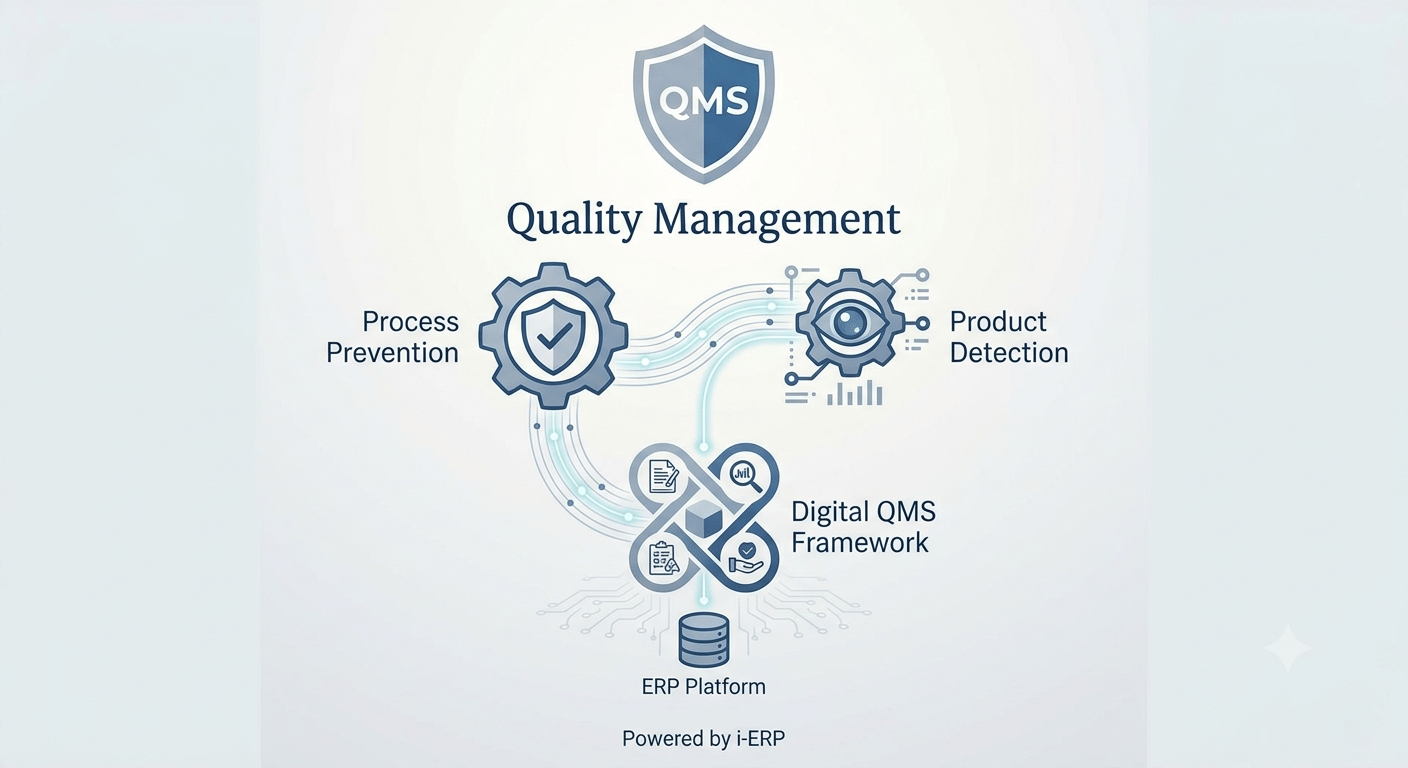
What is a Quality Management System (QMS)?
For manufacturers, quality isn't just a feature—it's the foundation of the business. A single product recall or a batch of non-conforming parts can lead to crippling costs, damaged customer trust, and significant operational disruption. A robust Quality Management System (QMS) is a formal framework of processes, procedures, and responsibilities that ensures your products consistently meet customer expectations and regulatory standards.
Think of a QMS as the documented, systematic approach to achieving quality objectives. It's not about occasional spot-checks; it's an integrated system that governs how your organization operates. Many manufacturers align their QMS with internationally recognized standards like ISO 9001 to demonstrate their commitment to quality and create a reliable framework for continuous improvement.
This guide explores the core components of a modern QMS and explains how a cloud ERP platform provides the digital foundation needed to make it effective.
Quality Assurance (QA) vs. Quality Control (QC)
Within a QMS, it's helpful to distinguish between two key functions:
Quality Assurance (QA): This is a proactive, process-focused approach. QA is about designing and implementing processes to prevent defects from occurring in the first place. Activities include process documentation (SOPs), supplier qualification, and employee training.
Quality Control (QC): This is a reactive, product-focused approach. QC involves the inspection and testing of products to identify defects before they reach the customer. This includes activities like incoming material inspection, in-process checks, and final product testing.
An effective QMS integrates both QA and QC. You design strong processes to prevent issues (QA) and implement checks to catch any that slip through (QC).
Why a QMS is Non-Negotiable for Modern Manufacturing
Implementing a formal QMS moves quality from an abstract goal to a measurable, controllable part of your operation. The benefits are substantial and directly impact profitability and growth.
Reduced Costs: The cost of poor quality (COPQ)—which includes scrap, rework, warranty claims, and returns—can represent 5 to 30% of a company's gross sales. A QMS systematically reduces these costs by focusing on prevention and early detection.
Improved Customer Satisfaction: Consistently delivering high-quality products builds trust, loyalty, and a strong brand reputation. A QMS ensures that customer requirements are understood and met with every order.
Enhanced Traceability and Compliance: For manufacturers in regulated industries (e.g., food & beverage, cosmetics, medical devices), a QMS is essential for compliance. Full traceability from raw materials to finished goods is a core component, allowing for swift and precise action in the event of a recall.
Operational Efficiency: Standardized processes and clear work instructions reduce variability and errors, leading to reduced waste, less downtime, and more predictable output.
Key Components of an Effective Manufacturing QMS
A comprehensive QMS is built on several interconnected pillars. While the specific implementation varies by industry, these core components are nearly universal.
Document Control
This is the foundation of any QMS. It involves managing all critical documents, such as Standard Operating Procedures (SOPs), work instructions, specifications, and quality policies. A good system ensures that employees always have access to the latest approved versions of documents, preventing errors caused by outdated information.
Traceability (Lot & Serial Tracking)
Traceability is the ability to track every component and finished product throughout the entire production lifecycle. Using lot numbers for batches of raw materials and finished goods, or unique serial numbers for individual items, allows you to pinpoint the source of any quality issue quickly. This is fundamental for managing recalls and is a requirement in many industries.
Non-Conformance & CAPA Management
When a product or process fails to meet specifications, it is considered a non-conformance. The QMS must define a process for identifying, documenting, and resolving these issues. This leads to Corrective and Preventive Actions (CAPA):
Corrective Action: Steps taken to fix the immediate problem and address its root cause to prevent it from happening again.
Preventive Action: Steps taken to address a potential problem before it occurs.
A structured CAPA process is a key driver of continuous improvement in a QMS.
Supplier Quality Management
Your product quality is directly tied to the quality of your suppliers' materials. A QMS includes processes for evaluating and qualifying new suppliers, monitoring their performance over time through scorecards, and managing incoming material inspections to ensure components meet your specifications.
The Role of ERP in Powering Your Quality Management System
Managing a QMS with spreadsheets, paper forms, and disconnected software is inefficient and prone to error. A modern ERP system acts as the central hub for all quality-related data and processes by integrating them directly into your core operations.
Here’s how an ERP brings your QMS to life:
A Single Source of Truth: An ERP centralizes all data related to inventory, production, suppliers, and customers. This eliminates data silos and ensures that quality decisions are based on accurate, real-time information.
Automated Traceability: When you receive raw materials, the ERP logs lot numbers. As those materials are used in production, the system automatically links the component lots to the finished good lots. This creates an end-to-end traceability record that can be accessed instantly.
Integrated Quality Workflows: Quality checks can be built directly into the workflow. For example, the system can require an incoming inspection before inventory is made available, or mandate in-process QC checks before a work order can advance to the next stage.
Non-Conformance and CAPA Tracking: When a non-conformance is identified on the shop floor, it can be logged directly in the ERP. This creates a digital record, triggers a workflow for investigation and root cause analysis, and tracks the resulting CAPA tasks through to completion.
Supplier Performance Data: The ERP tracks every supplier interaction—on-time delivery rates, non-conforming material reports, and inspection results. This data can be used to generate objective supplier scorecards, allowing you to manage your supply chain more effectively.
By embedding QMS functions within the same system that manages your inventory, production, and purchasing, an ERP makes quality an integral part of your daily operations, rather than a separate manual task.
Ready to see how an integrated system can transform your quality management? Explore our resources at User Guide or contact our team to learn how ianaiERP builds quality into every step of your manufacturing process.